Lived Experience Speaker or Clinical Expert: Which Should You Book?
 Last updated: October 2026 · By Oly Newton
The short answer
Book a lived experience speaker if you want people to talk, feel less alone and start asking for help. Book a clinical expert if you want people to understand conditions, treatments and what the evidence says. If you can, book both.
I'm a lived experience speaker, so you'd expect me to tell you to book me. I won't. They do different jobs, and the right one depends on what you want to change. Here's an honest look at both.
Side by side
| Lived experience speaker | Clinical expert | |
|---|---|---|
| Who they are | Someone who has been through it | A psychologist, psychiatrist, therapist or other clinician |
| What they bring | Their own story, told honestly | Knowledge of conditions, research and treatment |
| Best at | Breaking silence, building connection, reducing stigma | Explaining what's going on and what works |
| How people leave | "That's me. I'm not the only one" | "Now I understand it" |
| Typical feel | Emotional, personal, often funny | Informative, structured, evidence-led |
| Watch out for | A sad story with nothing to take away, or no safeguarding | Accurate but forgettable, or too technical for the room |
| What to check | Safeguarding, signposting, whether they're well enough to share | Can they speak to a non-clinical audience? |
What lived experience does well
There's research behind this, not just my opinion. A major 2016 review in The Lancet, led by Professor Graham Thornicroft at King's College London, looked at what reduces mental health stigma. For adults, the most effective approach was social contact: hearing directly from people who've lived it (Mental Elf summary).
To be fair, the review also found the effects were strongest in the short term, and there's less evidence that attitudes turn into lasting behaviour change. That's exactly why what happens after a talk matters so much.
Here's what I see in the room:
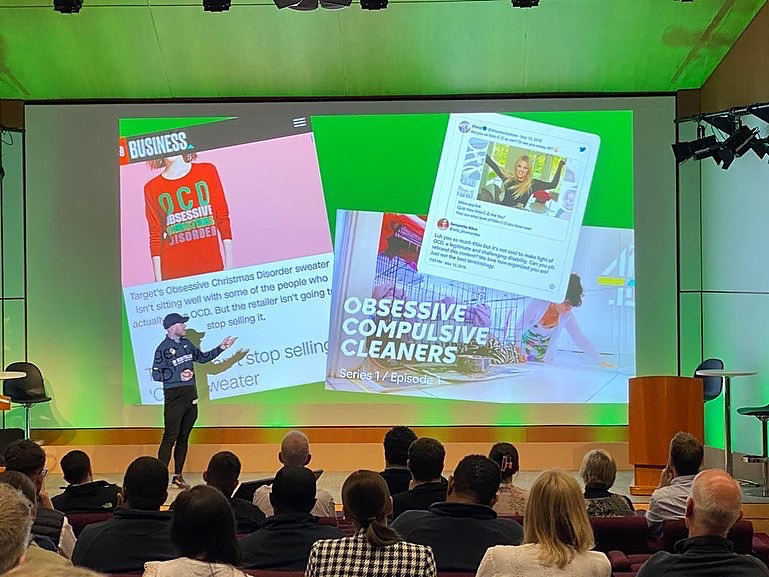
- People recognise themselves. At a joint pharmaceutical and construction event, the queue after my talk was full of lads in steel toe caps and high-vis, telling me things they'd never told anyone.
- It gives people permission. When someone stands up and says "this happened to me", it becomes safe for others to say "me too".
- It reaches people facts don't. Lived experience works best when the speaker reflects the room. My friend Tanya Marwaha is a brilliant example. She speaks from her own experience to break the stigma around mental health in South Asian communities. She's received a Points of Light Award and been recognised by Rethink Mental Illness. She reaches people in a way I never could, and she's made me a better ally.
What a clinical expert does well
I'm not a clinician, and I'd never pretend to be. A good clinical speaker brings things I can't:
- Accurate explanations. What anxiety, depression or OCD actually are, and how they're diagnosed.
- What works. The evidence on treatments, therapy and self-help, explained properly.
- Answers to tricky questions. Medication, waiting lists, when to see a GP. I'll always point those questions to a professional.
- Credibility with sceptical audiences. Some rooms, such as senior leaders, clinicians or very data-led teams, respond best to evidence first.
- Confidence for managers. Practical guidance on spotting signs and responding, from someone trained to do it.
The Thornicroft review found that education-based approaches are useful too, especially for building knowledge, and may work better than social contact with younger audiences. Knowledge matters. It just isn't always what gets people talking.
Which should you book?
Start with what you want to be different afterwards.
| If your goal is... | Book |
|---|---|
| Get people talking openly about mental health | Lived experience speaker |
| Reduce stigma in a culture that doesn't talk | Lived experience speaker |
| Encourage people to ask for help sooner | Lived experience speaker |
| Explain specific conditions and treatments | Clinical expert |
| Train managers to spot signs and respond | Clinical expert, or accredited training like Mental Health First Aid |
| Answer detailed questions about medication or diagnosis | Clinical expert |
| Launch a new wellbeing strategy or support offer | Both. Open with the story, follow with the detail |
| A big conference or awareness day | Lived experience to open, clinical expert for a breakout or panel |
Why not both?
Often the best answer is both.
For years I've worked alongside Kate O'Leary, a person-centred counsellor and therapist at Wellbeing First Aid. Together we've trained over a thousand Mental Health First Aiders and delivered talks and discussions across some of the biggest organisations in the country. My story gets people through the door. Kate's expertise is what they need once they're in.
If budget only stretches to one, ask your speaker how they handle the bit after the story. A good lived experience speaker will have signposting, safeguarding and ideally some training behind them. A good clinical speaker will know how to make the evidence human.
Where I fit
I'm a lived experience speaker. I talk honestly about OCD, anxiety, depression and ADHD, with a fair bit of Yorkshire humour. I've spoken for organisations from Microsoft and Burberry to the NHS, Tennis Canada and Vancouver FC.
I'm not a clinician. But I did train as a Mental Health First Aid instructor through MHFA England, because I wanted to hold a room safely when people open up. I follow Samaritans' guidelines on talking about suicide, and I'll always talk through your support and signposting before the day.
If you need someone to get your people talking, I'm a strong fit. If you need someone to explain treatments, book a clinician, and I'll happily tell you so.
See my corporate keynote · Should you book me? Who I'm right and wrong for · See my pricing
FAQs
What is a lived experience speaker?
Someone who speaks about mental health from their own personal experience, rather than from clinical training.
Are lived experience speakers effective?
Research led by Professor Graham Thornicroft, published in The Lancet in 2016, found social contact, hearing from people with lived experience, was the most effective way to reduce mental health stigma among adults, at least in the short term.
Should we book a psychologist or a lived experience speaker for a wellbeing day?
If you want people talking and seeking help, start with lived experience. If you want people to understand conditions and treatments, book a clinician. Many organisations book both.
Is a lived experience speaker safe for staff who are struggling?
It can be, if the speaker follows safe messaging guidelines such as Samaritans', signposts support, and you have support in place for anyone who comes forward.
Can a lived experience speaker give medical advice?
No, and a good one won't try. They'll point people to their GP, your employee assistance programme or specialist charities.